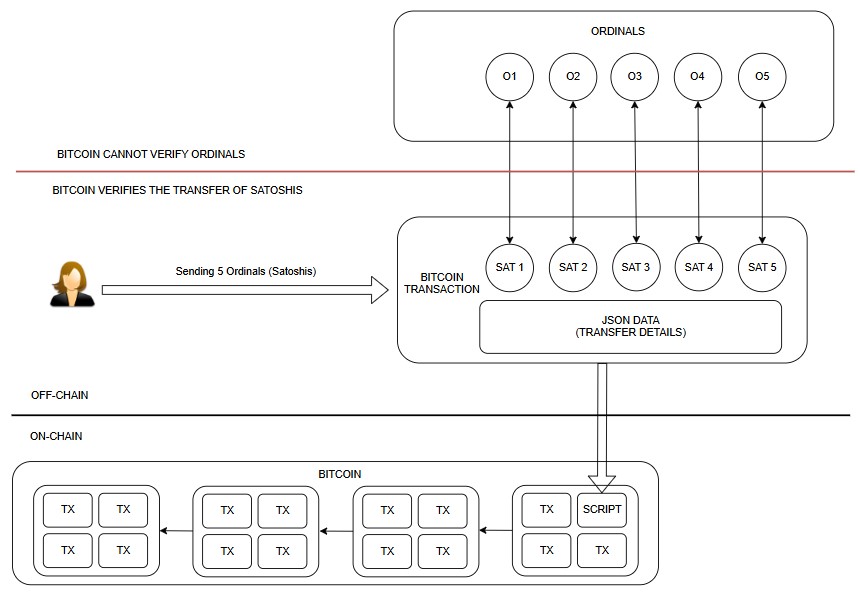
The Bitcoin community prioritizes simplicity, keeping its core protocol minimal while offloading complexity to off-chain solutions for additional functionality. As a result, Bitcoin primarily acts as a final arbiter, verifying transactions but not executing complex smart contracts. Solutions like BitcoinOS, BitVM, and BitVMX attempt to extend Bitcoin’s capabilities, but they introduce security and trust concerns, as they rely on external mechanisms rather than Bitcoin’s native consensus. In contrast, Cardano combines the best of Bitcoin and Ethereum. It preserves Bitcoin’s simplicity and robustness while offering programmability closer to Ethereum. Instead of being at one extreme, Cardano finds a balanced approach, making it more versatile for both secure transactions and advanced smart contracts. This article will explore Bitcoin's limitations and how external solutions enhance its programmability. After that, we'll look at how Cardano takes a different approach. Bitcoin’s Minimal Script and Programming Limitations Bitcoin’s design prioritizes simplicity and security, resulting in a highly minimal scripting model. Bitcoin Script is a simple, stack-based, non-Turing-complete language used mainly to lock and unlock funds with basic conditions (hashlocks, timelocks). It deliberately omits features common in general-purpose smart contract platforms – for instance, it has no loops, no complex data structures, and only basic opcodes. While this keeps the base layer robust, it severely limits programmability. Bitcoin cannot natively execute complicated logic or maintain mutable state over time; it simply verifies cryptographic signatures and simple conditions on a per-transaction basis. A direct consequence is the absence of a native token standard on Bitcoin. Unlike Ethereum’s ERC-20 or Cardano’s native assets, Bitcoin’s protocol does not have built-in support for user-defined tokens. Projects that created “tokens” on Bitcoin had to do so off-chain or via overlay protocols that piggyback on Bitcoin transactions. Bitcoin nodes themselves remain unaware of these tokens. The core protocol will not enforce token rules such as total supply, valid transfers, or double-spend prevention beyond the base BTC value. All token logic is handled externally by specialized software interpreting the Bitcoin chain. This means from Bitcoin’s perspective, a “token transfer” is just arbitrary data; the network cannot validate, for example, that an issued stablecoin is fully collateralized or that an NFT hasn’t been double-spent. Because Bitcoin does not natively validate token rules, the settlement guarantees for Bitcoin-based tokens are weaker. Users must trust the off-chain logic or third-party consensus that tracks those tokens. If that off-chain logic fails or is subverted, Bitcoin’s miners and nodes would not automatically prevent inconsistencies like token oversupply or invalid transfers. For example, Ordinals use a convention to attach metadata (inscriptions) to individual satoshis to create NFTs, and BRC-20 is an experimental “token standard” that uses text inscriptions (JSON data) to represent fungible tokens. These schemes do not use any smart contract logic on-chain – they rely on what amounts to off-chain indexing and rules interpretation. Bitcoin miners and validators do not know or care about the content of the inscriptions; thus BRC-20 tokens have no native enforcement of their supply or transfer constraints. In short, Bitcoin provides no built-in ERC-20/721 equivalent – any tokenization must occur through clever encoding of data and community-agreed rules, which are external to Bitcoin’s consensus. Bitcoin Script Opcodes and Programmability Bitcoin’s scripting language is built around a set of operation codes (opcodes) that define the actions to be performed during transaction validation. Each opcode performs a simple task – for example, pushing or comparing data, verifying signatures, or performing arithmetic – and together they form the “script” that locks or unlocks a transaction output. Script opcodes include: OP_CHECKSIG – Consumes a public key and signature, and pushes true if the signature is valid for the transaction or false otherwise. This is used to verify digital signatures, ensuring the spender is authorized. OP_EQUALVERIFY – Compares the two top stack items for equality and fails the script if they do not match. OP_RETURN – Creates provably unspendable outputs, often used for embedding 80 bytes of data storage in standard transactions. Bitcoin Script has no opcodes to read or write global state – it cannot loop through UTXOs or check blockchain data like the current block height within a script. It operates only on the data given to it (such as signatures, pubkeys, hashes) and the contents of the spending transaction. These limitations mean Bitcoin’s programmability is constrained to relatively simple stateless contracts. You cannot implement arbitrary logic or maintain persistent state as you would in a Turing-complete smart contract platform. Workarounds via Off-Chain Execution: BitVM, BitVMX and Bitcoin OS Despite Bitcoin’s scripting limitations, developers have devised ingenious workarounds to enable more complex financial contracts using Bitcoin as the settlement layer. These solutions typically involve moving the heavy computation off-chain and then using Bitcoin’s limited script for verification or enforcement of the results. Essentially, they turn Bitcoin into a “court” that can judge computations done elsewhere. Let’s examine the major approaches, including optimistic fraud proofs and emerging Bitcoin operating systems. Optimistic Execution and Fraud Proofs (BitVM) One breakthrough concept is BitVM, proposed by Robin Linus and collaborators. BitVM is not a literal virtual machine running inside Bitcoin, but rather a protocol that allows two parties to execute arbitrary computations off-chain and then prove, via Bitcoin transactions, whether the result was correct. It relies on an optimistic model (similar to optimistic rollups in Ethereum): the computation is assumed correct by default, and only if a participant suspects fraud does the Bitcoin chain get involved to adjudicate. BitVM takes an arbitrary computation and expresses its steps as a series of boolean evaluations. Rather than running this “circuit” on-chain, BitVM has the parties run the computation off-chain and record a transcript of all the intermediate results. One party is designated the prover/operator, who claims a certain outcome for the computation, and the other is the verifier who checks it. They set up a Bitcoin transaction that locks funds with a script enforcing the BitVM rules. If the prover’s result is suspected to be wrong, the verifier can initiate a dispute on-chain. The dispute is resolved through an interactive challenge-response protocol, often called a verification game. BitVM’s original design requires the participants to set up a number of pre-signed transactions covering all possible branches of the dispute process ahead of time. This ensures that, at dispute time, the verifier can broadcast these transactions to progress the on-chain verification game without needing the prover’s cooperation (since a cheating prover might try to stall). The limitations of BitVM are also apparent. The initial version of BitVM was essentially a two-party protocol – only the pre-chosen verifier could challenge the computation, and only the funds of the participants who set up the BitVM contract were involved. If the verifier disappears or colludes with the prover, a fraudulent result might go unchallenged. This means BitVM (v1) carried an implicit trust assumption that at least one party is honest and online (a “1-of-2 honesty” assumption). Another shortcoming was performance: encoding an arbitrary program as a huge boolean circuit and verifying it via Bitcoin transactions is extremely inefficient in practice. Each step of computation might correspond to an on-chain step in the worst case, which is orders of magnitude slower and costlier than doing the same on a native smart contract chain. BitVMX: RISC-V Virtual CPU on Bitcoin To overcome some of BitVM’s initial limitations, developers proposed enhanced designs. One notable advancement is BitVMX. It generalizes the concept into a virtual CPU architecture that runs on top of Bitcoin via an optimistic verification game. BitVMX defines a standard CPU instruction set that can execute arbitrary programs. Developers can compile high-level code (from C, Rust, or even Cardano smart contract languages) to RISC-V machine code, then use BitVMX to simulate that machine’s execution with Bitcoin enforcing the results. This effectively turns Bitcoin into a “verification layer” for a RISC-V virtual machine. As the operator (prover) runs the program off-chain on the virtual CPU, they record a hash of each step’s state (e.g. CPU registers, memory) chained together (execution trace). This hash chain allows efficient binary search during disputes without storing a giant tree of all steps. BitVMX uses “message linking with one-time signatures” to carry state across multiple transactions. In practice, this means the outcome of one transaction’s verification game can be fed as the starting state of the next transaction, enabling stateful smart contracts on Bitcoin. In other words, BitVMX provides a way to have a long-lived contract that progresses through multiple Bitcoin blocks/transactions, rather than being confined to a single transaction’s script. This is a form of covenant that doesn’t require new opcodes: by pre-signing a sequence of transactions with hashed state commitments, BitVMX ensures that each state transition is validated by the dispute protocol if contested. This message-linking effectively “shares state between transactions”, emulating what a normal smart contract would do by updating internal variables. The implications of BitVMX are significant. It suggests that Bitcoin can gain Ethereum-like flexibility without modifying Bitcoin’s core. Bitcoin OS: “Operating System” of Decentralized Rollups Another ambitious approach to extend Bitcoin’s functionality is encapsulated in projects like Bitcoin OS (BOS). Despite the name, “Bitcoin OS” isn’t an operating system in the traditional sense; it’s a framework for building a network of Bitcoin layer-2s, essentially a superchain of rollups on Bitcoin. BitcoinOS leverages a combination of techniques, including zk-SNARK validity proofs and optimistic rollup designs, to achieve its goals. One key component is BitSNARK, BOS’s protocol for verifying ZK proofs on Bitcoin. In simple terms, BitSNARK allows a Bitcoin script to validate a SNARK proof (a succinct cryptographic proof of some statement) with minimal on-chain computation. Normally, verifying a zk-SNARK might be too complex for Bitcoin’s Script, but BitSNARK uses an interactive approach – an off-chain prover provides a short proof (compressed to a few hundred bytes) and the Bitcoin script can check it with only a handful of operations. It employs a challenge-response game (not unlike BitVM’s) where a proof that something happened on another chain (or off-chain) can be confirmed by the Bitcoin contract, “without relying on trust”. Using BitSNARK and related components, BitcoinOS demonstrated a “bridgeless” cross-chain transfer of BTC to Cardano and back, without any custodial bridge. In a recent demo, 1 BTC on Bitcoin was converted to an xBTC token on Cardano and later redeemed, using purely cryptographic assurances instead of a trusted intermediary. Reliability and Constraints of Off-Chain Approaches While the above solutions are innovative, it’s crucial to evaluate their reliability, security, and practical constraints. By moving functionality off-chain or into meta-protocols, we introduce new considerations that differ from a native smart contract platform: Trust and Assumptions The optimistic schemes (BitVM, BitVMX) assume that an honest party will be monitoring and willing to challenge fraud. This introduces a liveness requirement: if the honest verifier is offline or asleep at the switch, a dishonest counterparty could slip through a false result once the dispute window passes. Bitcoin contracts using these schemes typically enforce a time window during which disputes can be raised. If that window closes without a challenge, the result is finalized. This is similar to how Lightning channels or optimistic rollups work – users might need to run “watchtowers” or monitoring software to ensure their funds aren’t stolen. Thus, participants bear more responsibility to remain online or delegate watching, unlike on Cardano or Ethereum where the network itself executes every step of a contract. Pre-Signed Transaction Complexity Protocols like BitVM require parties to pre-sign a tree of transactions covering every possible dispute path. This could be a very large number of transactions if the computation is large. Managing these pre-signed transactions securely is non-trivial – if any are missing or improperly generated, a clever attacker could force a scenario not covered and potentially lock funds. Additionally, all participants must be locked in from the start. BitVMX’s improvements mitigate this by using one-time signatures to link steps dynamically, but the setup is still more complex than deploying a single smart contract. Each participant must also put up a security deposit to incentivize honesty (so that a liar stands to lose funds when caught). The size of the required deposit and the duration it must be locked are factors that will impact usability. Multi-Step Disputes and Latency The interactive verification games mean that finalizing a result can take multiple on-chain transactions across multiple blocks. If a dispute occurs, the parties may exchange challenges back and forth, potentially over several rounds, before the Bitcoin script can conclusively determine the winner. This adds latency to contract resolution. For example, if each challenge/response takes one block to confirm and a binary search requires, say, 10 steps, that’s at least 10 blocks (~100 minutes on Bitcoin) to resolve the dispute. During this time, funds are tied up and cannot be used elsewhere. This is acceptable for some use cases (like a cross-chain peg) but problematic for high-frequency trading or quick DeFi liquidations. Moreover, each on-chain step costs fees, so complex disputes become expensive. Scalability and Efficiency Off-chain computation is cheap, but the verification on-chain is computationally expensive relative to native execution. The BitVM approach essentially emulates a CPU at a much lower throughput. A Turing-complete VM can execute certain logic in a single transaction that BitVM would require many orders of magnitude more resources to verify. Even if only disputed cases hit the chain, one must consider worst-case scenarios. If these systems were widely used, a malicious actor could intentionally trigger disputes to spam the network. Additionally, Bitcoin’s limited block space and 10-minute block times make it less flexible for interactive protocols compared to faster chains. Partial Security vs Full Security The security of these layer-2 constructions is often conditional. For instance, in a BitVM channel, if Bitcoin’s hash power were to be bribed or if miners decided to censor the verifier’s transactions, a fraud could go unpunished. Bitcoin’s own security is very strong against double-spending BTC, but it makes no explicit guarantees about honoring protocol-level disputes of external computations beyond including transactions in blocks. In other words, these systems inherit Bitcoin’s security assuming timely transaction inclusion. If an attacker can delay a critical challenge transaction past the timeout (perhaps by spamming the mempool or exploiting miner behavior), they might steal funds. Such scenarios are far-fetched but highlight that the threat model for off-chain systems is broader – one has to consider miner incentives, network latency, and collateral sizing to align everything. Contrast this with an on-chain contract on Cardano/Ethereum: as long as the chain itself produces blocks, the contract’s rules execute automatically in one block without requiring adversarial interplay. External Verification for Tokens For Bitcoin-based tokens and contracts, another reliability concern is the need for external indexing and consensus. If everyone uses the same software (say an OmniCore client for Omni tokens or an Ordinals indexer for NFTs) and it’s bug-free, then all is well. But there have been cases where different parsers disagreed on token state due to minor implementation differences. The lack of a single, on-chain source of truth means consensus on token state is “soft” – it’s a social consensus rather than a hard protocol consensus. For truly trustless operation, multiple implementations and audits are needed to ensure the meta-protocols don’t hide inflation bugs or vulnerabilities. In the BOS example, initially some components were closed-source, prompting the community to demand more transparency to fully trust the “bridgeless” claims. Over time, one would expect these systems to get battle-tested, but in early stages they should be treated as experimental, with users understanding the additional risk factors compared to base Bitcoin. Off-chain and Layer-2 approaches for Bitcoin represent a trade-off: we gain functionality at the cost of complexity. Security becomes layered – you have Bitcoin’s rock-solid base, but on top you have new protocols with their own security assumptions (fraud proofs, timely responses, cryptographic proof soundness, etc.). The overall system is only as secure as the weakest link. That said, the design of these workarounds strives to keep Bitcoin’s fundamental guarantees intact. If everything works as designed, users should be able to get the same final security (e.g., eventual settlement of a fraud-proof contract is as irreversible as any Bitcoin tx). But achieving that final state involves weaving through a more complicated path than on a purpose-built smart contract blockchain. Advantages of Cardano’s On-Chain Validation for Complex Apps Given the above, it’s clear that having more logic on-chain (as Cardano and Ethereum do) can simplify certain aspects of application design. Let’s highlight some advantages of Cardano’s on-chain validation approach, especially in contrast to doing things via off-chain Bitcoin workarounds. Local State with Deterministic Transitions Each Cardano smart contract (Plutus script) deals with its piece of state (the datum in its UTXO), and the rules for updating that state are embedded in the script. Because transactions must explicitly consume and produce UTXOs, the state transition from one valid state to the next is deterministic and atomic in one transaction. There’s no need for multi-round interactive games to resolve the new state – the validity of a state update is decided by one block’s worth of computation. This is a huge advantage for user experience: when a transaction containing a contract execution is included in a Cardano block, you immediately know the outcome, and if succeeded, the new UTXOs are the new state. In contrast, with something like BitVM on Bitcoin, if a dispute arises, users might have to wait many blocks to know the final outcome. Deterministic transitions also mean you can formally verify properties of the state machine more easily. For example, you might prove that from State A, only State B or C can follow according to the script, and any other attempted state will be rejected. This can give strong guarantees about things like no matter what users do, the total supply of token X in this contract can only move in specified ways, etc. While optimistic protocols can eventually enforce something similar, the immediate deterministic check is a simpler model to reason about. No Reliance on Watchers or Custodians Because Cardano executes and validates contracts on-chain, users don’t need to trust external agents to intervene. The network validators collectively enforce contract rules automatically. There’s no concept of a single “verifier” or a set of “watchers” – every node is effectively a verifier of every contract execution. This massively distributes trust and removes user burden. A Cardano user doesn’t have to keep their computer online to make sure a contract isn’t cheating them; the protocol itself guards them (assuming the script is correctly written). This aligns with blockchain’s value proposition of trustless automation. In contrast, a Bitcoin user participating in a BitVM contract better have a contingency to watch the blockchain or hire someone to do it, or else they risk losing funds if the counterparty cheats. With Cardano/Ethereum, the block producers themselves are the executors of logic – so either all of them colludeto subvert the logic (basically break the chain’s security) or the rules are followed. This is why we say Cardano/Ethereum give strong settlement finality for contract operations: once confirmed, you know the global consensus agrees on the result per the contract code. Rich Token and Contract Interactions On-Chain For complex applications, having on-chain enforcement of token logic and contract interactions simplifies integration. For example, consider a Cardano DEX again: the act of providing liquidity or swapping is a single on-chain transaction that moves ADA and tokens around, and the contract ensures the ratios. The user can see the transaction on the ledger and know it’s final. If the same DEX were implemented via Bitcoin and a separate layer, you might have a sequence where the user sends BTC to some escrow, some oracle or off-chain matching engine pairs orders, then perhaps outputs a result that someone needs to settle on-chain with a proof. There are many moving parts where things can break or require trust. With on-chain, it’s straightforward: the moving parts are all contained in one atomic action. Formal Verification and High Assurance Cardano’s emphasis on formal methods means that its protocol and smart contract language were designed with verification in mind. The deterministic nature of EUTXO means a contract can be analyzed like a mathematical function – it takes an input (old UTXO state + transaction info) and either rejects or produces a new state. This pure function model (Plutus is basically a pure function from inputs to Bool for validation) makes it feasible to use formal verification tools. In fact, one can extract a logical model from a Plutus script and use theorem provers or model checkers to verify properties. By having more complexity on-chain but in a rigorously defined way, Cardano allows developers to prove correctness for complex applications. For instance, they could prove that “this contract will never lose collateral unless certain known conditions are met” or “users can always retrieve their funds given these assumptions,” etc. With Bitcoin’s off-chain contracts, formal verification is trickier – you’d have to verify both the off-chain computation code and the on-chain dispute mechanism together, which span different environments (and the off-chain part could be large). It’s doable in theory, but far less straightforward than verifying a self-contained on-chain program. Locality and Modularity Each Cardano contract is isolated – it only affects the UTXOs related to it. This avoids systemic risks where a bug in one contract could directly jeopardize others. If a contract has a bug, typically only that contract’s UTXOs are at risk; other contracts don’t call into it so they won’t automatically catch the “contagion”. This modularity is good for complex multi-application ecosystems – it’s easier to reason about each part separately. It also enhances parallelism: multiple different contracts (UTXOs) can be processed at once by different nodes/cores, which is helpful for scalability as demand grows. Predictable Execution Costs As mentioned, Cardano transactions have predictable execution costs determined before inclusion. For complex apps, this means no sudden gas price surprises – a dApp developer can set expectations for users about fees and performance. This makes advanced applications (which might be long-running or heavy in logic) more user-friendly because the cost model is stable. Imagine a complex option settlement contract; on Ethereum, if the network is busy at expiry time, the settlement could be prohibitively expensive or delayed. On Cardano, the cost in lovelace is known from the contract’s resource usage and not directly inflated by unrelated activity (though overall demand still can increase min fees if blocks are full, but it’s a different mechanism). Summary None of this is to say Cardano’s approach is strictly superior – it has trade-offs like any design. But for the purpose of the question, the advantages listed show why having robust on-chain validation can be very appealing for complex decentralized applications. You get immediate security guarantees, simpler user trust assumptions, and strong correctness assurances, at the cost of a more complex base protocol and potentially some throughput limitations that need to be engineered around. It’s also noteworthy that Cardano’s philosophy aligns in some ways with Bitcoin’s (UTXO-based, secure, peer-reviewed) but diverges in the acceptance of more complexity to achieve programmability. Cardano tries to cherry-pick the benefits of Bitcoin’s model (UTXO, no global mutable state) and Ethereum’s model (smart contracts, tokens). Conclusion: Bitcoin’s Minimalism vs. Programmable Platform Trade-offs Bitcoin’s minimalism yields robustness and predictability. Upgrades are rare and conservative, meaning Bitcoin offers a very stable target for long-term value storage. This security-first philosophy has earned Bitcoin the reputation of the most secure and censorship-resistant cryptocurrency. However, this approach inherently sacrifices flexibility and scalability for advanced uses. As we’ve explored, Bitcoin cannot natively support the rich financial applications that have emerged in the blockchain space. Any attempt to do so either compromises on trustlessness (e.g., using centralized exchanges or custodial solutions to get “Bitcoin DeFi”) or requires adding layers of complexity on top of Bitcoin (which themselves might reintroduce risk). Bitcoin offloads complexity to secondary layers. The trade-off is that by not integrating these capabilities natively, you often get a less seamless or less efficient solution. For instance, Lightning is great for many payments but has liquidity management issues and user experience hurdles that on-chain simple payments (like just sending tokens on Cardano/Ethereum) don’t face. Similarly, doing DeFi via Bitcoin layers might always lag in efficiency and composability compared to doing DeFi directly on a smart contract layer – at least until those layers become very mature. We’re essentially recreating much of the functionality of Ethereum/Cardano in these Bitcoin layer-2s, but with extra hoops to jump through (watchtowers, liquidity hubs, etc.) because of Bitcoin’s constraints. On the other hand, Ethereum’s approach (and to some extent Cardano’s) of building complexity into the base layer yields incredible flexibility and ecosystem growth, but not without costs. Ethereum’s on-chain activity led to high fees and the need for its own layer-2 scaling solutions; its openness led to countless hacks and exploits as people experimented with complex contracts. In short, we have a spectrum: Bitcoin at one end: maximally secure/simple base, minimal features. Relies on external systems for extra functionality. Pros: very low chance of catastrophic failure if base layer is kept simple; easier to maintain decentralization; narrative of digital gold. Cons: slow to adapt, reliant on potentially centralized or less secure layers for anything beyond basic transfers. Ethereum at the other end: rich features on base, rapid evolution. Pros: huge developer mindshare, first-mover advantage in DeFi, can do almost anything in smart contracts, fosters innovation directly on L1. Cons: complexity can lead to vulnerabilities; scaling requires complicated solutions (which themselves add layers); base layer changes can be contentious (e.g., the recent push to RISC-V as Buterin proposed shows even Ethereum community debating big jumps). Cardano somewhere in between: thoughtfully adds features while trying to maintain some of Bitcoin’s rigor. Pros: many of Ethereum’s capabilities with a UTXO model that makes certain analyses easier, built with formal methods for higher assurance. Cons: newer and less battle-tested, and UTXO model limits synchronous composability, meaning it’s hard to achieve the same DeFi composability as Ethereum without workarounds (like batchers or L2). Each approach has merit for different goals. For a decentralized base currency, Bitcoin’s minimalism is arguably a feature, not a bug – it keeps the base conservative so that value layer remains rock-solid. For a programmable platform to build all kinds of decentralized apps, Ethereum’s path unlocked an entire industry of innovation (DeFi, NFTs, DAO governance mechanisms, etc.) that simply wouldn’t exist if everyone stuck to Bitcoin-like designs. Cardano attempts to get the best of both, but it too must make trade-offs. The current trend suggests a kind of convergence via layering. Complex programmable finance requires either a complex base platform or complex secondary infrastructure. There is no free lunch. Bitcoin opted for the latter – keep base simple, accept complexity off-chain. This ensures the core stays ultra-reliable. Others opted to enrich the core. The trade-off can be framed as security/stability vs. flexibility/scale. For developers and users, the landscape now offers choices: build on Bitcoin via these new layers if you value the Bitcoin base properties above all, or build on platforms like Cardano and Ethereum if you need first-class programmability and are willing to accept a more complex underlying infrastructure. Each route is valid, and indeed we see efforts to combine strengths – for example, using Bitcoin’s liquidity in Ethereum DeFi, or using Cardano’s eUTXO model to verify Bitcoin events, etc.