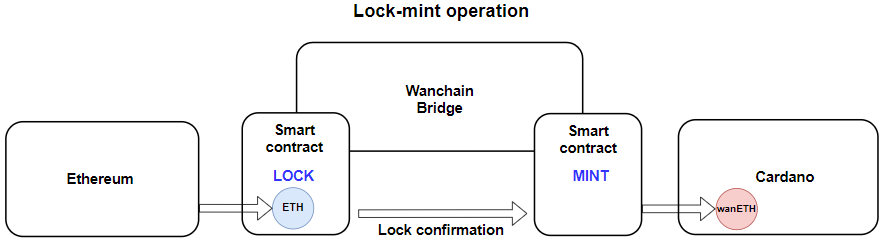
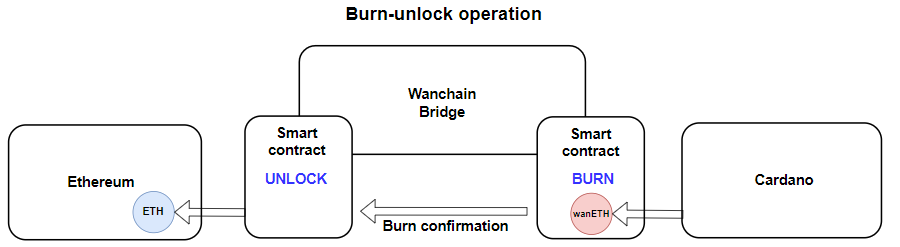
In the recent demo by BitcoinOS (BOS), 1 BTC was sent from Bitcoin to Cardano and back without any third-party bridge or custodian. The process involved creating a new “xBTC” token representation of the BTC and using cryptographic proofs instead of a trusted intermediary. The BOS-Cardano demo garnered a lot of excitement, but also critical questions from the community. Developers and community members have largely praised the technological achievement, but they've also pointed out areas where BOS has been unclear or potentially misleading. The skepticism is partially justified, as many users have been burned by closed projects making big claims. Read what happened in the demo from our understanding. BOS vs. Traditional Blockchain Bridges BOS’s mechanism differs fundamentally from traditional blockchain bridges, so it’s worth knowing how traditional bridges operate. In a typical cross-chain bridge, either custodial or federated, if you want to move BTC to another chain (say Cardano or Ethereum), you send BTC to a special address where it gets locked up. A custodian (which could be a centralized company or a decentralized multisig, or a smart contract) holds that BTC. Then, an equivalent token (like Wrapped BTC on Ethereum) is minted on the target chain. The original BTC stays locked as collateral. In the image, you can see bridging of ETH from Ethereum to Cardano via the Wanchain Bridge. ETH is locked on the Ethereum side, and wanETH is minted on Cardano. Later, if you want to redeem, you burn the wrapped token, and the custodian releases the BTC to you. In the image, you can see burning of wanETH on Cardano and unlocking ETH on Ethereum. The weak point is that the custodian or bridge contract is holding all the collateral. Users must trust that it won’t be hacked, lose keys, or run away with funds. Unfortunately, this trust has often been betrayed – bridge hacks and failures have been rampant, with over $2 billion in losses from cross-chain bridge exploits in recent years. For example, the Ronin bridge hack and others showed how attackers target these centralized vaults. Even federated bridges (like multisigs) concentrate risk. Traditional bridges introduce custodial risk and single points of failure, essentially breaking the trustless nature of blockchains. BOS aims to eliminate the central vault. Instead of locking BTC with some third party, the BTC is locked programmatically by a Bitcoin script that no one controls – it’s only unlockable with a valid ZK proof. The “bridge” is thus reduced to a set of protocol rules and proofs rather than an entity. BOS’s xBTC is minted directly by the act of a Bitcoin transaction (via the meta-protocol) and secured by a proof of the original BTC. No new trust assumptions are introduced beyond the existing security of Bitcoin and Cardano themselves and the correctness of the cryptography. The BOS team emphasizes that this method “keeps the asset secure using zero-knowledge (ZK) proofs, instead of custodial arrangements”. In effect, the “vault” holding BTC is Bitcoin’s own blockchain – the funds are locked in a special output on Bitcoin, and only a corresponding burn on Cardano (proven via zkSNARK) can unlock it. There is no scenario where an intermediary can misbehave, because there is no intermediary: either the proof is valid and the protocol lets the BTC out, or it isn’t and the BTC remains locked. Traditional bridges usually rely on a multisig or validator set to attest that a deposit happened and mint a token on the other side. If that set is corrupted or spoofed, fake mints can happen (leading to unbacked tokens), or legitimate collateral can be stolen – exactly what happened in many hacks. BOS relies on Bitcoin miners and nodes to enforce the script and on cryptography. The security assumption for BOS’s bridge is that Bitcoin’s mining majority remains honest (to enforce the script rules) and that the zk-proof system is sound (cannot be faked). There’s no separate set of “bridge validators” that can be attacked or bribed. Essentially, BOS turns the bridge problem into an internal Bitcoin validity problem. If someone tries to cheat, the Bitcoin network would reject the transaction as invalid, or a BitSNARK verifier would catch it and financially penalize the prover. Bridgeless BTC Transfer: How It Worked Without a Traditional Bridge Let's describe what you could see in the demo: The image shows a bridgeless transfer of BTC from Bitcoin to Cardano and back. The steps were as follows: Locking and Minting xBTC on Bitcoin: The 1 BTC was first locked in a Bitcoin transaction and “wrapped” into an xBTC token directly on the Bitcoin blockchain. In other words, a special Bitcoin output encumbered the BTC and simultaneously generated an xBTC token, carrying a cryptographic proof of the original Bitcoin’s existence and value. This xBTC acts as a fully programmable proxy for the BTC. Transferring xBTC to Cardano (Sundial L2): Once minted, the xBTC moved to Cardano. It was sent to a hybrid Bitcoin–Cardano L2 wallet on the Sundial protocol. Sundial’s wallet can interface with both chains, so the xBTC effectively “hopped” (was beamed) onto Cardano’s network. From the Sundial L2, the xBTC was then transferred into a Cardano mainnet address (in the demo, to an address associated with an ADA Handle). At this point, the BTC’s value was live on Cardano as an xBTC token, available for use in Cardano’s DeFi environment. Returning BTC to Bitcoin: To send the value back, the xBTC on Cardano was destroyed (burned) on the Cardano side, and that event was proven to the Bitcoin network. The xBTC token was sent to an unspendable address or otherwise marked as burned on Cardano, and a ZK proof of this burn was generated. Using BOS’s protocol, that proof was then included in a Bitcoin transaction to unlock the original 1 BTC from its encumbered state. In the Bitcoin transaction, the previously locked BTC was unwrapped back into a normal Bitcoin UTXO, completing the round trip. Crucially, this entire round-trip did not rely on a centralized bridge or custodian holding the BTC. BOS uses ZK proofs to ensure that the BTC on Bitcoin is only released if the corresponding xBTC on Cardano was verifiably burned, all without trusting a third party. BTC was locked by script and only unlocked via math-backed proof. The BOS team calls this a “bridgeless transfer" because the usual bridge mechanics (trusted lock and mint) are replaced by on-chain verification of a cryptographic proof. Understanding the Term Beaming BOS developers often refer to these cross-chain transfers as “beaming” BTC from one chain to another. The term “beaming” evokes the idea of a Star Trek teleporter – the asset is dematerialized in one location and re-materialized in another, rather than carried across a bridge. When you beam BTC from Bitcoin to Cardano, the BTC is not left locked on Bitcoin at all – it’s as if it vanished from the Bitcoin chain and now exists on Cardano as xBTC. There is no residual token or contract holding that BTC on Bitcoin; the original UTXO is consumed (spent) with the understanding that it’s now represented elsewhere. In the demo, once the 1 BTC was “beamed out", it was no longer spendable on Bitcoin until it was "beamed back" (unlike traditional bridges where the original coin sits in a vault on Chain A). Technically, under the hood, beaming involves creating a special output (sometimes called a placeholder UTXO) and embedding proof data. For example, to beam to Cardano, a Bitcoin transaction spends the BTC into a script that contains (or will later contain) the proof of the Cardano side. The Cardano side, upon receiving the beam, might also include a reference to the Bitcoin transaction. Every “bridgeless beaming" transfer carries a proof of the token’s transaction history and origin across chains, ensuring that the token on the destination chain is legitimate and corresponds to a burned token on the source chain. This way, the supply is conserved and no double-spend can occur across chains. The key difference in beaming is that the source chain doesn’t retain control. Traditional bridges lock the coin on the source (you trust that lock) and mint on the destination. BOS’s beaming instead invalidates the coin on the source chain (except under conditions that prove it was burned on the other side). It’s an atomic hand-off: either the BTC is on Bitcoin, or it’s on Cardano as xBTC, but never in two places and never held by a third party in the middle. This eliminates the need to trust a custodian at the pivot point. Likewise, when you beam back from Cardano to Bitcoin, the Cardano side xBTC is completely destroyed (so it no longer exists on Cardano) and a Bitcoin transaction “re-materializes” the BTC. This is done by putting a ZK proof in a Bitcoin transaction that proves the Cardano token was burned. The Bitcoin script, upon validating that proof via BitSNARK, releases the BTC to the owner. From the user’s perspective, their Cardano asset disappears, and the real BTC shows up in their Bitcoin wallet. In short, beaming = burn on Chain A + mint on Chain B with verifiable proof linking the two. As one BOS developer put it, when you beam assets, “tokens are not locked on the Bitcoin side – they’re simply gone, and now exist on Cardano”. Finality and the Open Question of Cross-Chain Immutability Both Bitcoin and Cardano use Nakamoto consensus, meaning transactions only become final after several confirmations. This poses a key challenge for BOS: how does it decide when a transaction, such as one locking BTC or burning xBTC, is truly final and safe to act on? Because blockchains can be reorganized, acting on a transaction too early could result in invalid cross-chain states or even loss of funds. For example, minting xBTC on Cardano based on a Bitcoin transaction that later gets orphaned could break the one-to-one BTC backing. To maintain security, BOS must define clear finality thresholds—how many blocks to wait on each chain before accepting a transaction as immutable. However, BOS has not yet publicly detailed how this is handled, whether it's enforced by the protocol, set by clients, or coordinated by verifiers. Until this mechanism is clarified, finality remains an open and critical aspect of BOS’s architecture. It's essential for BOS to address this transparently to ensure the integrity of its trustless bridging claims. What is BitcoinOS (BOS) and How Does It Work? BitcoinOS (BOS) can be described as a smart contract operating system for Bitcoin. In essence, BOS is a framework that extends Bitcoin’s functionality by enabling complex smart contracts, tokens, and even L2 rollups to operate while still anchored to Bitcoin’s security. The BOS architecture is built on Bitcoin but does not require any changes to Bitcoin’s core code or consensus rules. Instead, it works as a layer on top of Bitcoin (often called a meta-protocol), using clever uses of Bitcoin’s scripting and transaction format (e.g., leveraging Taproot and ordinals-style data embedding) plus off-chain protocols. Key components and concepts in BOS include: BitSNARK: This is BOS’s ZK proof verification protocol for Bitcoin. It’s a specialized virtual machine and protocol that can verify zk-SNARK proofs inside Bitcoin transactions, despite Bitcoin’s limited scripting language. BitSNARK uses an interactive prover and verifier game via Bitcoin transactions to check arbitrary computations or external events with minimal on-chain data. In practical terms, BitSNARK lets Bitcoin contracts verify that something happened on another chain (or off-chain) by validating a short proof, without relying on trust. BitSNARK is highly optimized for Bitcoin’s constraints – it compresses proofs to ~350 bytes and uses only 3 Bitcoin script operations to verify, making on-chain verification feasible. xBTC and Programmable Tokens: BOS introduced xBTC as a new token standard representing Bitcoin in a programmable way. xBTC is part of BOS’s meta-protocol on Bitcoin that supports smart contract-like behavior and cross-chain transfers. The BOS design allows tokens to be created and managed via Bitcoin transactions (similar in spirit to Ordinals or BRC-20, but more powerful). Each xBTC carries proofs of its history and is valid across multiple chains. In the demo, xBTC essentially functioned as a Bitcoin-backed asset that could move to Cardano and back. Grail and Bitcoin Rollups: Grail is the codename for BOS’s cross-chain bridge and rollup technology. Grail refers to a “Holy Grail” trustless bridge implementation that allows Bitcoin to connect with other chains (or L2s) using ZK proofs. The Cardano integration uses the Grail bridge. More broadly, BOS envisions supporting Bitcoin rollups – i.e. whole smart contract chains that settle to Bitcoin. These rollups would use Bitcoin as the base layer for finality and use BOS’s protocols for verifications and for moving BTC between L1 and L2. In the Cardano case, Cardano’s side of the bridge (Sundial) functions analogously to a rollup or sidechain where BTC liquidity can live. BOS is building an extended Bitcoin ecosystem. It lets developers use languages like Rust or Solidity to write applications that run off-chain or on L2 but are secured by Bitcoin. The Cardano bridge demo is one example of BOS in action – showing that Bitcoin can directly interoperate with a completely different blockchain through this BOS layer. Sundial: The Cardano–BOS Connection Sundial is the protocol that facilitated the Cardano side of this BTC transfer. In essence, Sundial is a Cardano-based L2 optimized for Bitcoin integration. Sundial is a hybrid L2 blockchain on Cardano for Bitcoin staking and DeFi. It was designed to bring Bitcoin’s liquidity into the Cardano ecosystem in a secure, scalable way. Sundial is built in collaboration with Anastasia Labs using their Midgard L2 framework. By leveraging Midgard, Sundial can handle many transactions (like trades, stakes, etc.) with Bitcoin liquidity without congesting Cardano L1, while still ultimately settling on Cardano for security. Sundial functions as an execution layer on top of Cardano that is tuned for handling BTC assets. Sundial’s most critical feature is its trustless bridge to Bitcoin via BOS. It explicitly integrates the BOS Grail protocol and BitSNARK verification to move BTC in and out without custodians. In the demo, Sundial’s L2 wallet was the recipient of the xBTC coming from Bitcoin. Sundial was essentially the portal where the Bitcoin UTXO’s proof was accepted and a Cardano-native token was issued. Then, when that token was burned, Sundial helped generate the proof to send back to Bitcoin. All of this is automated by the BOS tech integrated into Sundial. From Cardano’s perspective, Sundial is just another Cardano sidechain or extension – but one that can talk to Bitcoin. Community & Developer Responses: Transparency and Skepticism Some were confused or skeptical about the claim of “no bridge” or “bridgeless transfer.” They argued that functionally, this is still a bridge – just a more trustless one. The term “bridgeless” was seen as a marketing tweak that could mislead people into thinking no intermediary mechanism exists at all, when in reality, there is a complex protocol acting as the bridge. BOS developers have tried to clarify that “bridgeless bridging” means no third-party bridge – the transfer is direct and protocol-driven. The need for additional explanations shows that BOS could be more transparent in how they present the mechanism to non-experts. The concept of “beaming” was new and needed explanation so people wouldn’t assume some magic was happening. Overall, once explained, most technically savvy users recognized that BOS’s approach is indeed novel and trust-minimized, but the terminology initially puzzled some. A significant criticism has been BOS’s level of transparency with code and technical details. While the team touts decentralization, some noted that much of BOS was developed behind closed doors and only bits have been open-sourced. As noted, only BitSNARK’s core was initially opened, with other components proprietary. This led to concerns: for instance, can the community verify that the demo was truly trustless if the full code isn’t available? Skeptics pointed out that, in theory, if BOS controlled both ends of the demo and the code isn’t open, one has to take their word that no centralized controls or backdoors were used. BOS’s response is that the on-chain evidence is public (the transactions on Bitcoin and Cardano can be inspected on explorers) and that they plan to open everything important in time. Nonetheless, in the crypto ethos of “don’t trust, verify,” some developers are uneasy that they cannot yet verify all aspects of BOS’s system. BOS did make a tangible step by releasing BitSNARK and documentation. It may simply be a matter of time until more is revealed. The community is basically saying: “Great idea, but please open up the implementation so we can truly trust it.” Another critique is that BOS’s announcements could give the impression that anyone can now move BTC to Cardano at will. In reality, what’s been shown is a technical proof-of-concept on mainnet, but it’s not yet a user-facing product or decentralized service. Some community members have pointed out that it’s unclear when ordinary users can utilize this “bridgeless bridge”. BOS has not announced a live mainnet application or interface for public use, nor have they detailed the economic model. Critics say BOS sometimes hypes the achievement without equally emphasizing the remaining work to productionize it. That said, most in the Cardano and Bitcoin tech circles do understand this is early, and they’re simply keen to know the roadmap from demo to deployment. Conclusion BitcoinOS presents a groundbreaking vision for trustless, cross-chain interoperability—eliminating the need for traditional bridges and custodians through the use of ZK proofs and Bitcoin-native protocols. Its recent demo transferring BTC to Cardano and back showcases the real potential of this architecture to unlock Bitcoin liquidity for broader DeFi ecosystems. However, while the underlying concepts are technically impressive and promising, the long-term viability and trustworthiness of BOS hinge on full transparency. Key components—such as the meta-protocol for tokenization, cross-chain proof standards, and the Grail bridge logic—must be fully open-sourced and subjected to extensive peer review and security auditing. Only through broad developer scrutiny, real-world stress testing, and community involvement can BOS mature from an exciting prototype into a foundational layer of the Bitcoin ecosystem. BOS could reshape Bitcoin’s role in Web3—but it must first earn the trust of the community it aims to serve.