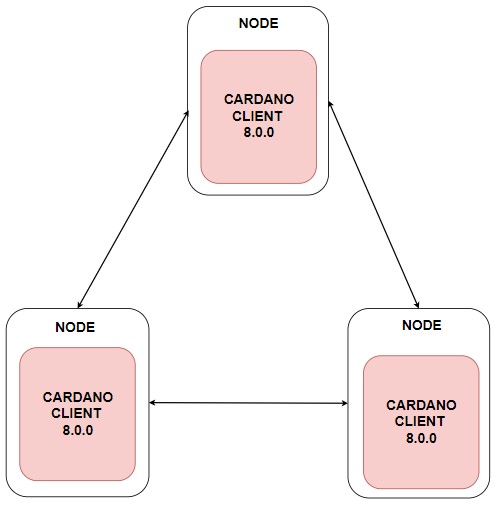
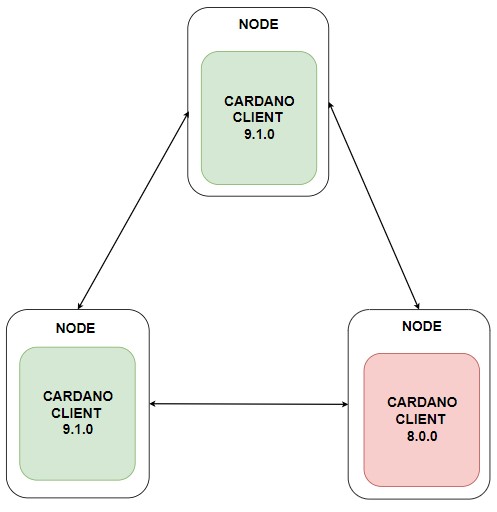
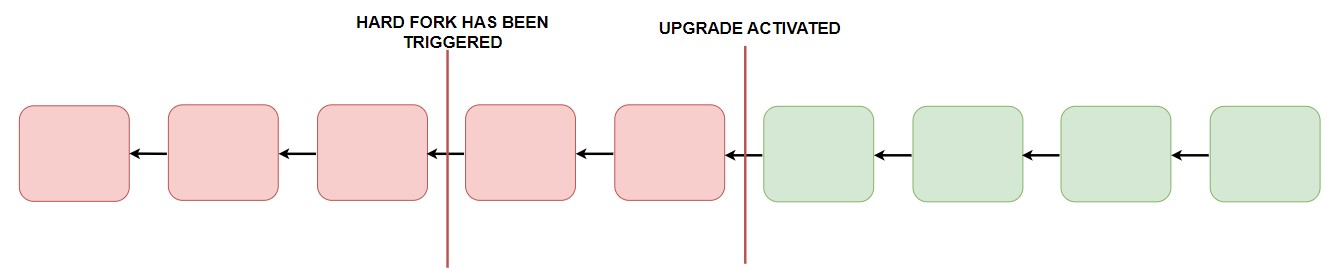
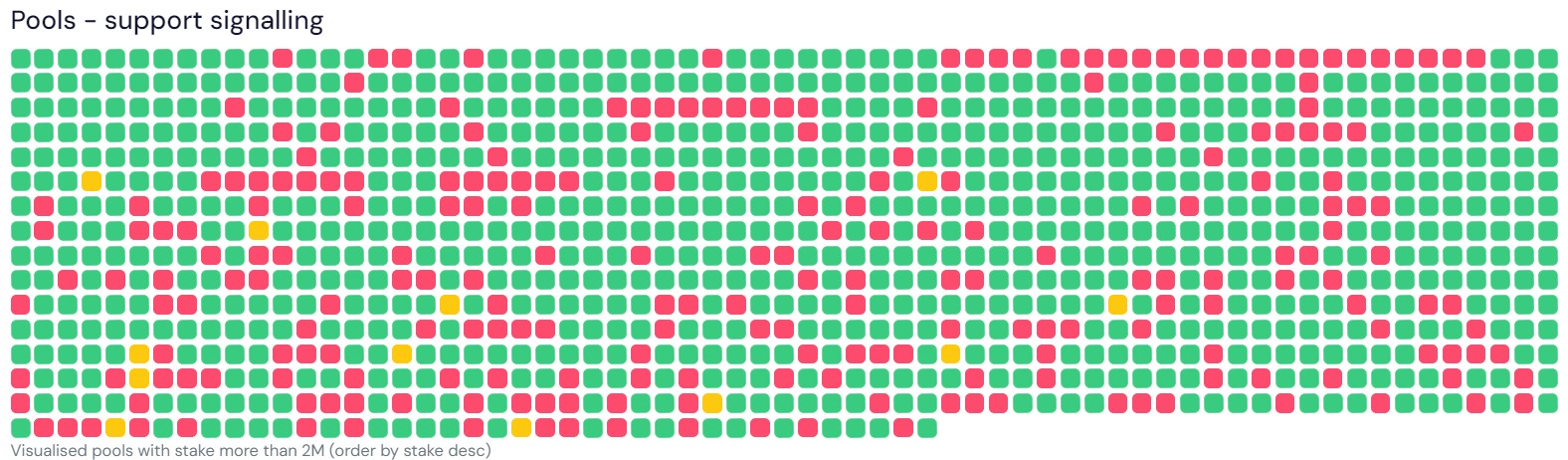
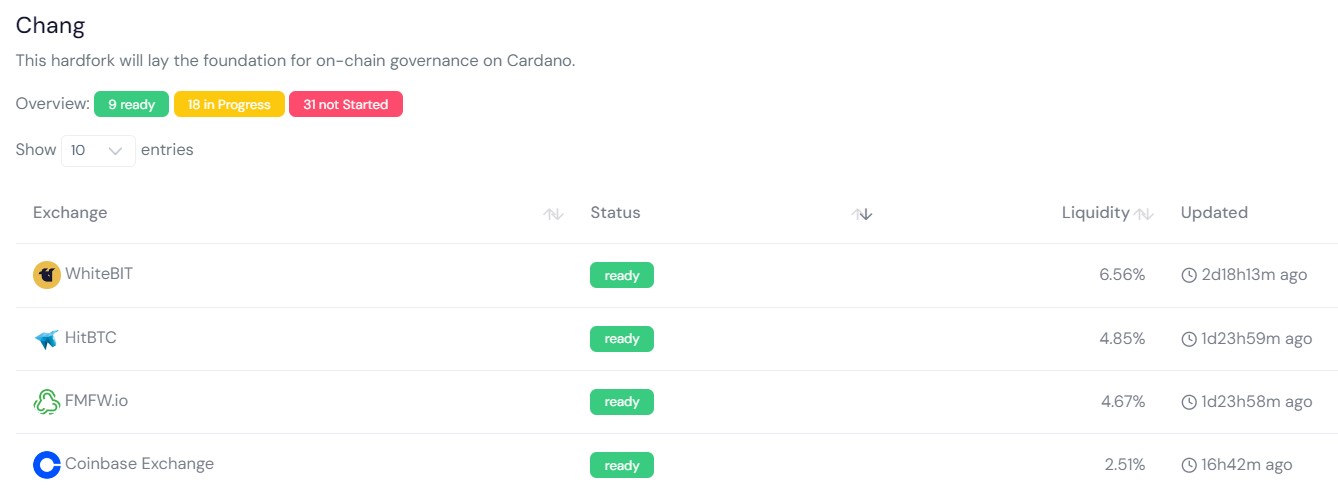
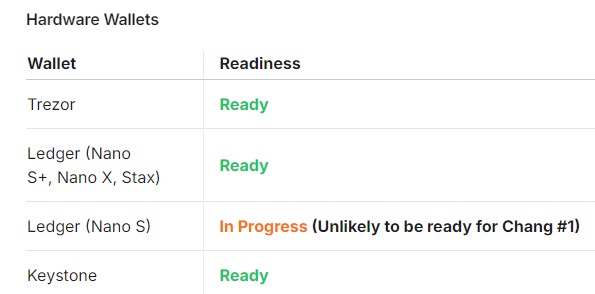
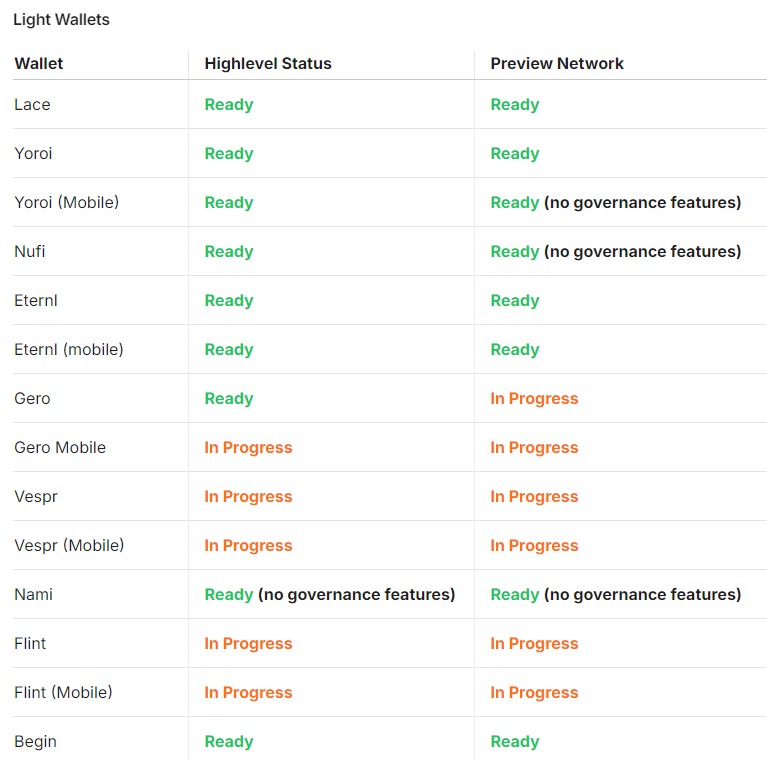
Hard forks often bring confusion and chaos for users, but not with Cardano. Thanks to the hard fork combinator, transitioning to a new version is seamless and straightforward. The community eagerly anticipates the Chang hard fork and most Stake Pool Operators (SPOs) are already prepared for it. The best part for users is that they don't need to do anything with their assets or wallets. The upgrade will occur without restarting the network, ensuring there will be only one version of Cardano and ADA coins after the hard fork. The Chang Hard Fork The goal of a hard fork is to change the protocol's rules in a way that is not backward compatible. This means that the older version of the client (Cardano node) cannot correctly process blocks produced by the new client. Before the upgrade is announced, all nodes in the network run a compatible version of the client. For Cardano, version 8.0.0 might have been the most widely used. In the picture, you can see that before the delivery of the new version of the client, all operators were running version 8.0.0 or lower. The team has prepared a new client version, 9.1.0, which incorporates the Chang upgrade. Version 9.1.0 processes blocks in the same way as version 8.0.0. This means that after installing the upgrade, the new functionality is not immediately activated. During the transition period, SPOs need to install the new client version. This process can take several weeks or even months. For the entire period, all nodes must produce compatible blocks. This phase is crucial for decentralization, as SPOs independently decide whether to upgrade or remain on the old version. Neither the IOG team nor Intersect can compel anyone to install the new version. The network truly lies in the hands of the community. In the picture, you can see that part of the operators have upgraded the nodes to the new version 9.1.0 and part of them remain on version 8.0.0. All full node operators who agree to the change must install the new version on their hardware. Once the required number of operators has upgraded, the transition can be triggered using Genesis keys. The network receives a signal to switch to the upgraded client version, in this case, version 9.1.0. The upgrade to a new version occurs during the transition between epochs. This task is managed by the hard-fork combinator. The hard-fork combinator is designed to streamline network updates without requiring stoppages or restarts. It achieves this by combining pre-fork and post-fork blocks during a short transition period, maintaining one continuous blockchain. Instead of diverging into separate chains, the blocks are combined, ensuring continuity of user experience and preventing any network interruptions. As a result, there is no blockchain split. Cardano is upgraded, and the entire ledger history remains intact, continuing in a single valid version. In the picture, you can see the red blocks that produce nodes compatible with version 8.0.0. The first red vertical line indicates the triggering of the Chang hard fork. The second red vertical line is the point in time when the upgrade is activated. After that, blocks are produced by nodes that are compatible with version 9.1.0. When Can a Hard Fork Be Triggered? A hard fork can only be triggered when the network and infrastructure are fully prepared. This requires most SPOs to upgrade (70%). It's not just the number of nodes that matters, but also the stake (ADA coins) needed to produce blocks. In addition to pool operators, exchanges and DeFi infrastructure operators must also upgrade. People must be able to access assets on exchanges. By examining the blocks, it's easy to determine which version of the node produced them. Anyone can check if the conditions for triggering an upgrade are met. It is even possible to monitor the readiness of exchanges for the Chang hard fork. Users Do Not Need to Prepare In Any Way For The Hard Fork ADA holders, stakers, and DeFi users do not need to take any special action for the upcoming Chang hard fork. Unlike previous hard forks of Bitcoin or other blockchains, there is no need to move assets to exchanges. If you’re using the Daedalus wallet, you’ll receive a prompt to upgrade the software when necessary. The majority of the most popular HW wallets are Chang-ready. Most Light wallets will also be ready. You can check the current status on the Intersect site. For stakers, the only recommended action is to verify that your stake pool operator has upgraded to version 9.1.0. If they haven't and you support the Chang hard fork, you may want to inquire about the delay. Some operators may validate changes, so it may take them longer to upgrade. Be patient. For those with open DeFi positions, it’s advisable to monitor the official social media channels of the projects you use. Projects are likely prepared for the upgrade, but staying informed is always a good idea.